

What Is The Difference Between Cleaning Sanitizing And Disinfecting
Cleaning, Sanitizing, Disinfecting: What's the Deviation?
An essential office of running a successful business organisation is maintaining a clean environment. Whether you stay on top of your cleaning by using a cleaning checklist or schedule, ensuring that your location is cleaned regularly can help proceed your staff and customers salubrious.
Information technology's important to understand the different depths of cleaning to decide what method and practices y'all should have in your location to slow the spread of diseases and viruses. We'll be exploring the differences between cleaning, sanitizing, disinfecting, and sterilizing and so that you lot can best incorporate them in your janitorial regimen.
*Click here to encounter the CDC's recommendations for preventing the spread of Coronavirus.
Shop All Cleaning Supplies
What Is the Difference Between Cleaning and Sanitizing?
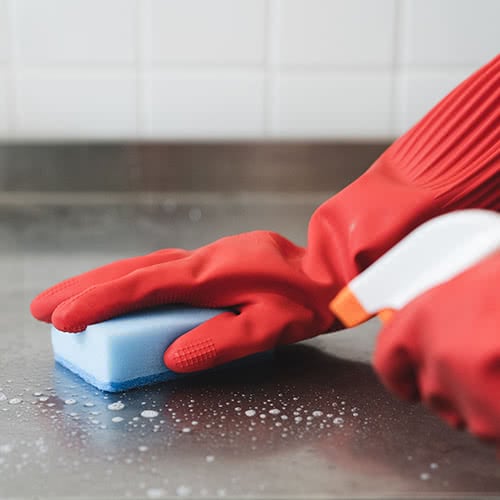
The main difference between cleaning and sanitizing is that cleaning is the act of clearing droppings and deposits on a surface, while sanitizing involves killing leaner later the surface has already been cleared or wiped off.
When comparing cleaning vs sanitizing, you'll desire to make sure that cleaning happens offset regardless of the surface, and that sanitizing follows depending on the area. Items that come up into contact with foods and that are frequently touched should be sanitized, while locations like hallway floors and windows do not demand to be regularly sanitized as they are considered low-risk surfaces.
Cleaning
To make clean something means to remove all of the visible contaminations on the surface, including clay, spills, nutrient particles, dust, etc., past washing, brushing, or wiping the expanse. This process is surface level and does not eliminate germs but tin can aid reduce their numbers. This is expected to be the first step in the cleansing process. Common cleaning products include:
- Soaps
- Detergents
- Vacuums
- Dusters
- Degreasers
- Drinking glass Cleaners
Sanitizing
Sanitizing means to reduce the corporeality of microorganisms similar bacteria, viruses, and fungi on a surface later on it has been cleaned. The sanitizer used must reduce the number of bacteria to the level that is deemed safe by the public health standards. To encounter CDC requirements, sanitizing chemicals must kill 99.999% of the examination bacteria in under thirty seconds.
Although sanitizing reduces the growth of harmful bacteria, information technology does not kill all of the viruses on a surface. Sanitizing is meant to be used as a preventative measure and is an extremely important exercise in restaurants, schools, corporate offices, and hospitals. Every surface that comes into contact with food should be sanitized regularly, often several times a twenty-four hours.
Disinfect vs Sanitize
The difference between sanitizing and disinfecting is based on the amount of bacteria each procedure eliminates. While sanitizing is meant to kill the majority of germs, it cannot make antiviral claims. Disinfecting is more potent than sanitizing and can kill nearly 100% of leaner, viruses, and fungi while targeting specific affliction-carrying microorganisms similar the flu virus, norovirus, and coronavirus.
Because disinfecting is more intense than sanitizing, disinfectant volition often be used in areas with a vulnerable population, such equally healthcare facilities and daycare centers. Sanitizing would be plenty for foodservice items such as tabletops and cut boards, only a disinfectant would exist needed for places like bathrooms and fitness centers.
Disinfecting
To disinfect means to impale specific viruses and pathogens on a surface using a disinfectant. These cleaning agents must kill 99.999% of infectious bacteria, viruses, and fungi within a v-10 minute period. It is recommended to disinfect frequently touched surfaces. Bathrooms should e'er be disinfected due to the pathogens those surfaces can harbor that tin can pb to the spread of disease. Common disinfectants include:
- Bleach
- Alcohol
- Chlorine
Difference Between Sterilizing and Disinfecting
Although the terms are used interchangeably, there are differences between disinfecting and sterilizing. Disinfecting eliminates nearly 100% of viruses and bacteria on surfaces, while sterilizing will kill all of the viruses, bacteria, fungi, and bacterial spores on an item.
While disinfecting is useful in most settings and on regularly touched surfaces, sterilizing is usually merely reserved for instruments used in medical facilities and hospital settings.
Sterilizing
To sterilize an particular means to completely eradicate microbes on its surface, including bacterial spores, bacteria, viruses, and fungi. Healthcare facilities are highly dependent on the sterilization of foods, medicines, and equipment to prevent infections in wounds and the spread of diseases from patient to patient. A few methods tin can be used to sterilize products:
- Chemicals
- Steam
- Oestrus
- Radiation
What Is the Proper Way to Sanitize a Table That Has Been Used for Preparing Food?
Follow these steps to sanitize a table that has been used for preparing food:
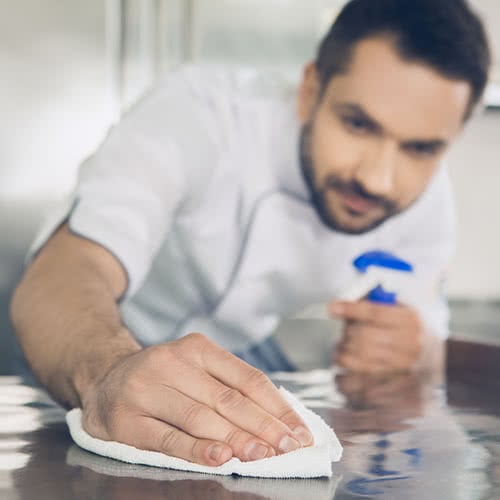
- Clean the surface of any visible debris.
- Rinse the surface with lather and clean water. Exercise non use high-pressure washers that can end upwardly spraying bacteria over a larger area.
- Sanitize the surface with food-safe sanitizer. Rinse the sanitizer if needed per the chemical's directions.
- Let the surface to air dry for a minimum of 30 seconds to a minute to allow the sanitizer to piece of work. Employ this time to implement a make clean break if your location requires food prep to be documented in lots and time shifts.
Because of how hands bacteria can be transferred to food and cause illness, proper sanitizing practices are highly necessary in restaurant atmospheres. It'southward important to use sanitizing methods in your restaurant kitchen to make clean tabletops, cutting boards, and utensils to prevent cantankerous-contamination that can cause food poisoning and allergic reactions.
What to Sanitize
The full general dominion of sanitation is that if an item comes into contact with food, it should be sanitized. Here are common items that will need to be regularly sanitized in your kitchen:
- Cutting Boards
- Worktables
- Pots and Pans
- Serving Utensils
- Countertops
- Cooking Equipment
When to Sanitize
Your wellness inspector volition be looking for proper cleaning and sanitizing practices in your eating place. Follow the steps beneath to know when y'all should exist sanitizing in your kitchen:
- Whenever you lot're done with a nutrient prep task
- Whenever you're switching between food types and ingredients
- If your task is interrupted, forcing you to walk abroad from the station
- Every 4 hours
How to Disinfect
For ofttimes touched surfaces, follow these steps to properly disinfect them:
- Read the characterization of the disinfectant you plan on using to ensure that y'all understand the directions for that product.
- Clean the surface of any visible debris.
- Rinse the surface with lather and clean water. For doorknobs and handrails, use full general-purpose cleansing wipes.
- Disinfect the surface with your disinfectant past post-obit the directions on the product. Leave the disinfectant on the surface for 3-5 minutes or every bit long as the product calls for.
- Rinse the disinfectant off the surface if the product calls for information technology.
What to Disinfect
Hither are some items in your facility that should be regularly disinfected:
- Light Switches
- Door Handles
- Lift Buttons
- Handrails
- Bath Surfaces
- Faucet Handles
- Computer Keyboards and Mice
- Phones
When to Disinfect
Disinfecting schedules may vary depending on your facility and the number of guests in your institution. The post-obit are some suggested moments when disinfecting should have place:
- One time a solar day at minimum
- At a higher frequency during common cold and flu seasons
- At a college frequency during a virus outbreak
- Whenever bodily fluids are on a surface
Practice Disinfectant Wipes Kill Viruses?
Because disinfectant wipes have shorter dwell times than most disinfectant chemicals, there is concern that they practise not have plenty time to kill the viruses on a surface. The cardinal to successfully disinfecting a surface is to read the details on the cleaning wipes you lot choose to apply. To confidently target viruses like the norovirus, influenza, rhinovirus, and coronavirus, the CDC advises on using disinfectant wipes that contain at least lx% booze.
Prevent Illness
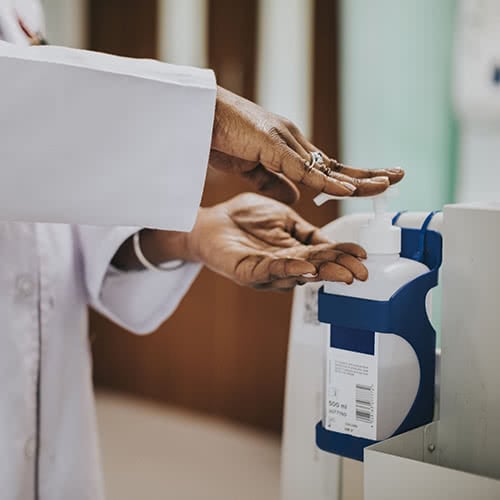
While cleaning, sanitizing, and disinfecting are essential parts of the restaurant food prophylactic guidelines for preventing diseases, at that place are additional practices that you and your employees can take to maintain a clean and good for you work environment.
Here are some disease prevention methods y'all can implement in your business organisation:
- Clean visibly soiled surfaces immediately
- Use hands-gratis dispensers, water faucets, and trash receptacles
- Employ gloves when cleaning soiled surfaces or during food prep (Practice not touch other surfaces during the task)
- Dispose of cleaning wipes and paper towels used to clean surfaces immediately later on completing the chore
- Use clean mop water when switching between rooms or when water is visibly dingy
- Launder hands for 20 seconds with soap and water after using the restroom, between switching tasks, after sneezing, or touching soiled tissues
- Go on staff members dwelling house when they are ill
- Avoid touching your rima oris, eyes, and nose
- Embrace the oral fissure and nose with a tissue when sneezing or coughing, then immediate dispose of the tissue
CDC Recommendations For Coronavirus
When protecting your concern from COVID-xix these are some of the recommendations from the CDC.
- Make clean frequently touched surfaces multiple times a twenty-four hours with sanitizers or disinfectants.
- Ensure that you and employees launder their easily with soap and water for 20 seconds, the time it takes to sing "Happy Birthday" twice.
- If lather is not readily bachelor, utilize sanitizer that contains 60% alcohol or more and rub your hands together until they feel dry.
- Do non touch your eyes, mouth, or olfactory organ with unwashed easily.
- Enforce social distancing when possible if COVID-19 is spreading in your community. This may hateful closing non-essential businesses or transforming your location to offer selection-up/drive-thru services only. Reduce your staff to essential personnel only.
- Stay home or go along employees home for 2 weeks if they are exhibiting flu similar symptoms.
When comparing the different cleansing practices, the number of leaner volition decrease as y'all progress from cleaning to disinfecting, to finally being fully eradicated with sterilizing. The merely way to ensure that your cleaning programme is successful is to provide your staff members with the proper grooming and guidelines. Yous may choose to hire a cleaning service for your eating house to brand your business a healthy place for your customers and employees.

Source: https://www.webstaurantstore.com/blog/3208/cleaning-sanitizing-disinfecting.html
Posted by: rogersburperear.blogspot.com
0 Response to "What Is The Difference Between Cleaning Sanitizing And Disinfecting"
Post a Comment