

How To Install Wget On Windows
What does WGET Practise?
Once installed, the WGET control allows you lot to download files over the TCP/IP protocols: FTP, HTTP and HTTPS.
If you're a Linux or Mac user, WGET is either already included in the package you lot're running or it'due south a trivial instance of installing from whatever repository y'all prefer with a single control.
Unfortunately, it's non quite that simple in Windows (although it'due south still very like shooting fish in a barrel!).
To run WGET you lot need to download, unzip and install manually.
Install WGET in Windows 10
Download the archetype 32 bit version ane.14 here or, get to this Windows binaries collection at Eternally Bored here for the later versions and the faster 64 flake builds.
Here is the downloadable aught file for version ane.ii 64 chip.
If you want to be able to run WGET from any directory inside the command terminal, you'll need to larn about path variables in Windows to work out where to copy your new executable. If you follow these steps, you lot'll be able to brand WGET a control you tin run from whatsoever directory in Command Prompt.
Run WGET from anywhere
Firstly, we demand to decide where to copy WGET.exe.
After yous'd downloaded wget.exe (or unpacked the associated distribution nix files) open a control terminal past typing "cmd" in the search menu:
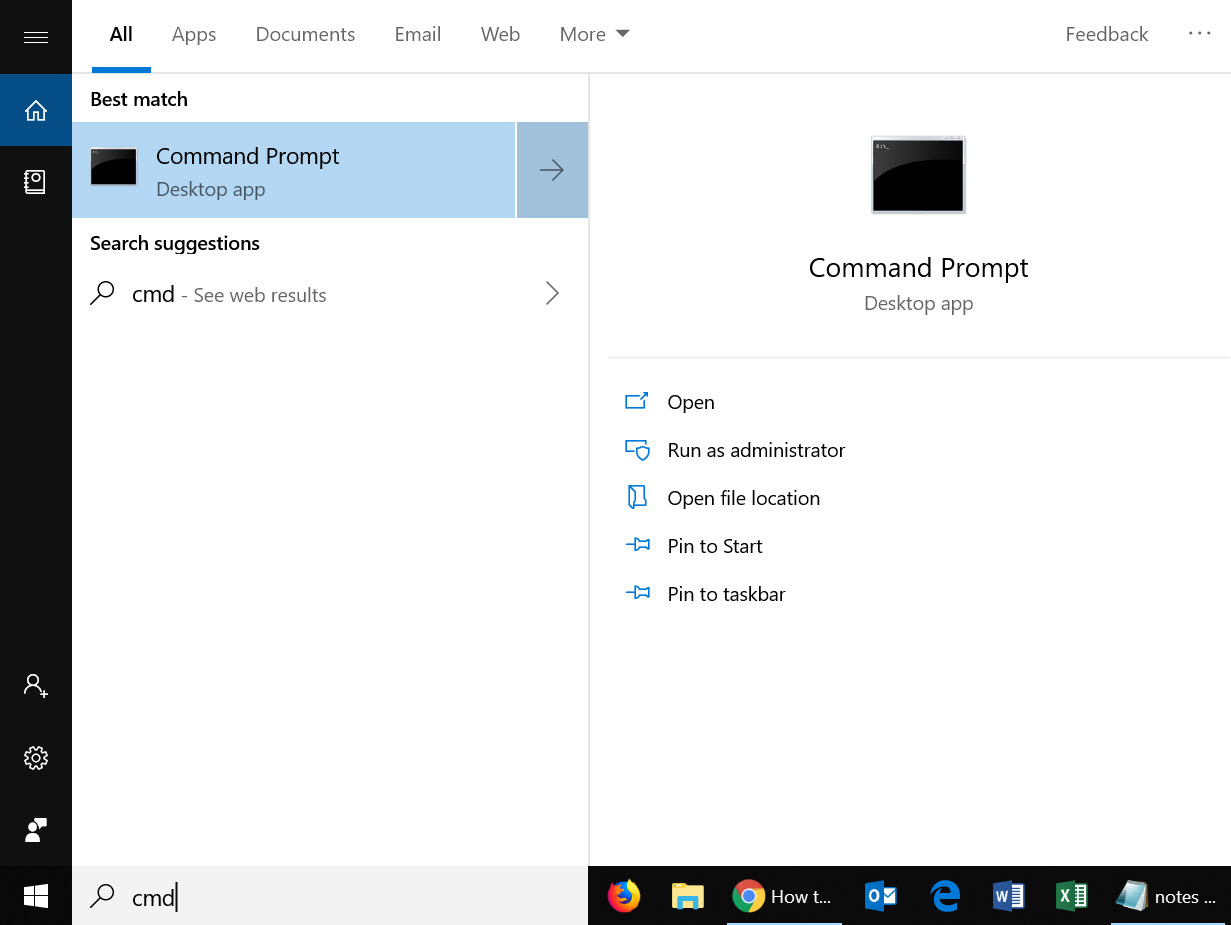
We're going to motility wget.exe into a Windows directory that will let WGET to be run from anywhere.
First, we need to find out which directory that should be. Type:
path
Y'all should meet something like this:
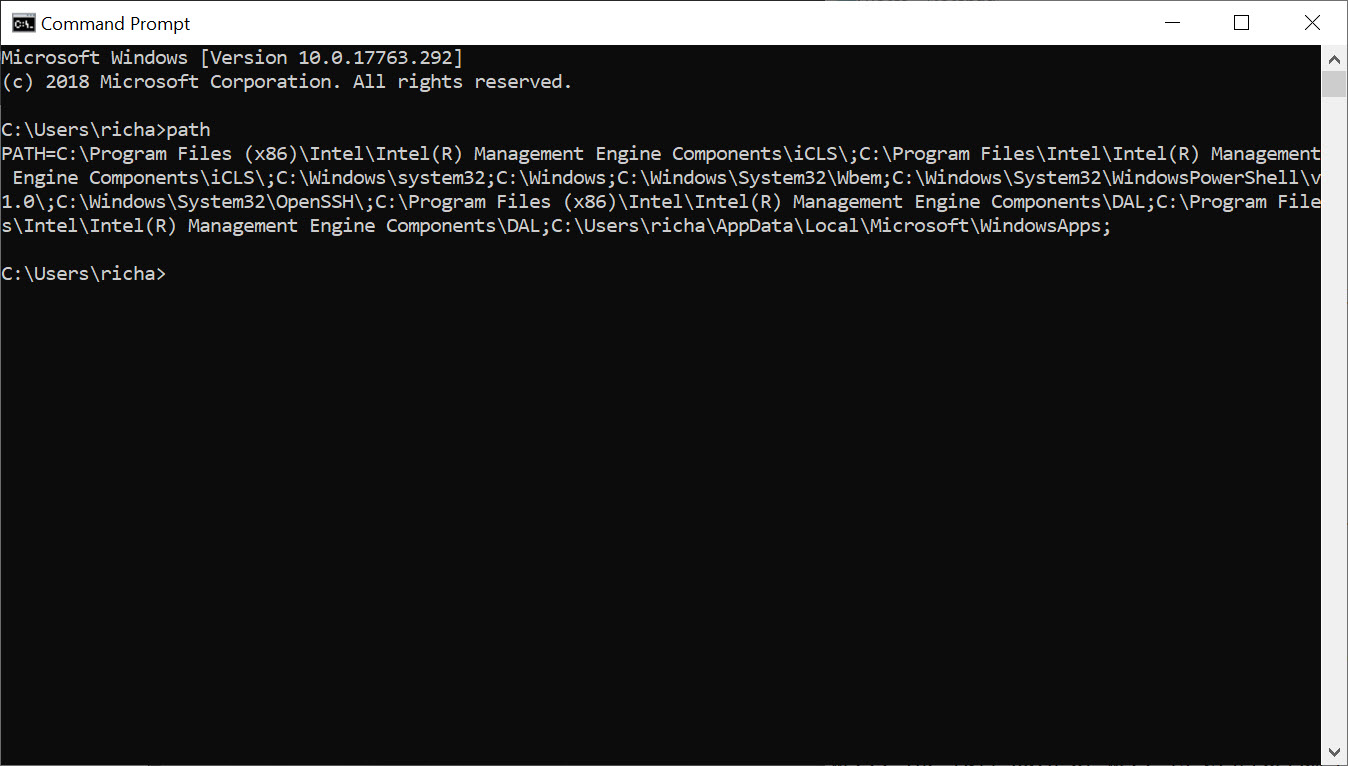
Thanks to the "Path" environment variable, we know that we need to copy wget.exe to the c:\Windows\System32 folder location.
Get ahead and copy WGET.exe to the System32 directory and restart your Control Prompt.
Restart command terminal and exam WGET
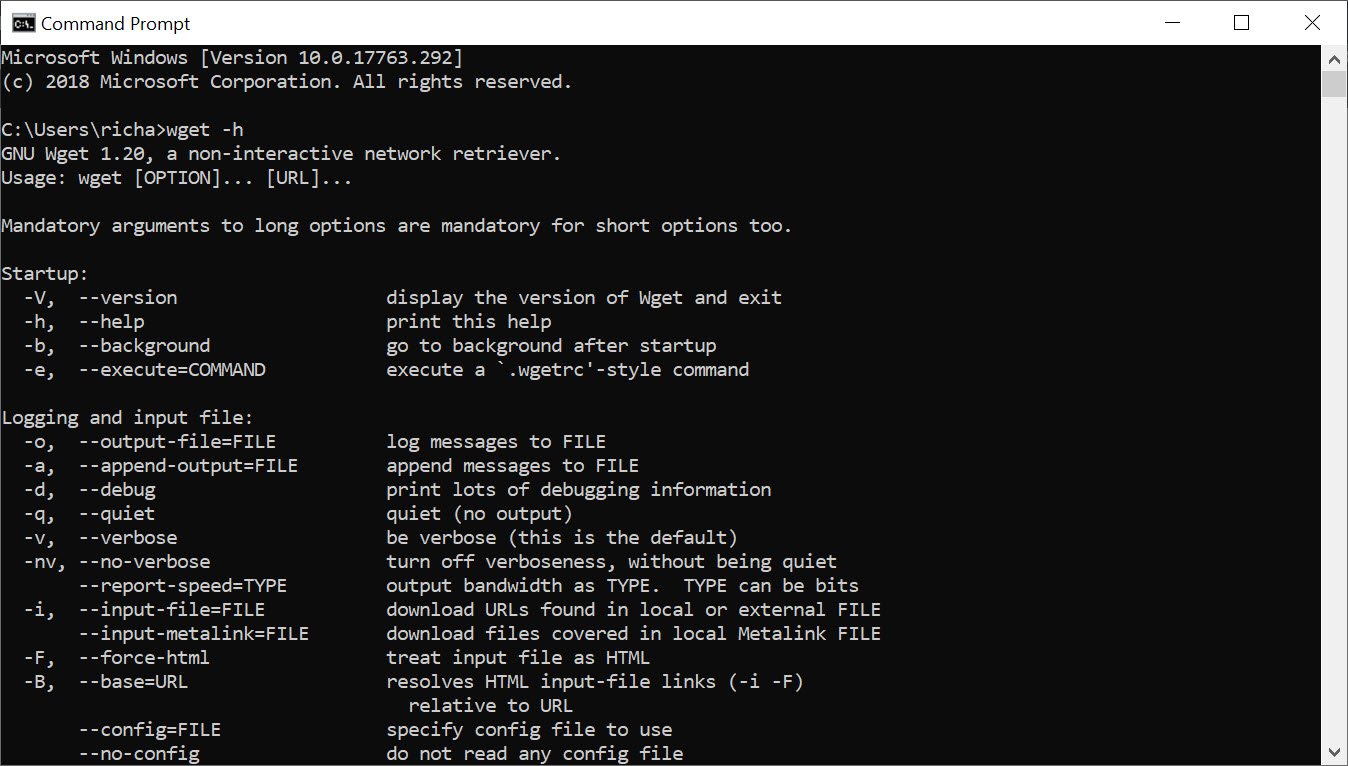
If y'all desire to examination WGET is working properly, restart your terminal and type:
wget -h
If yous've copied the file to the right place, you lot'll see a assist file appear with all of the available commands.
And then, you should meet something like this:
At present it's time to get started.
Get started with WGET
Seeing that nosotros'll be working in Command Prompt, permit's create a download directory but for WGET downloads.
To create a directory, we'll apply the command doc ("make directory").
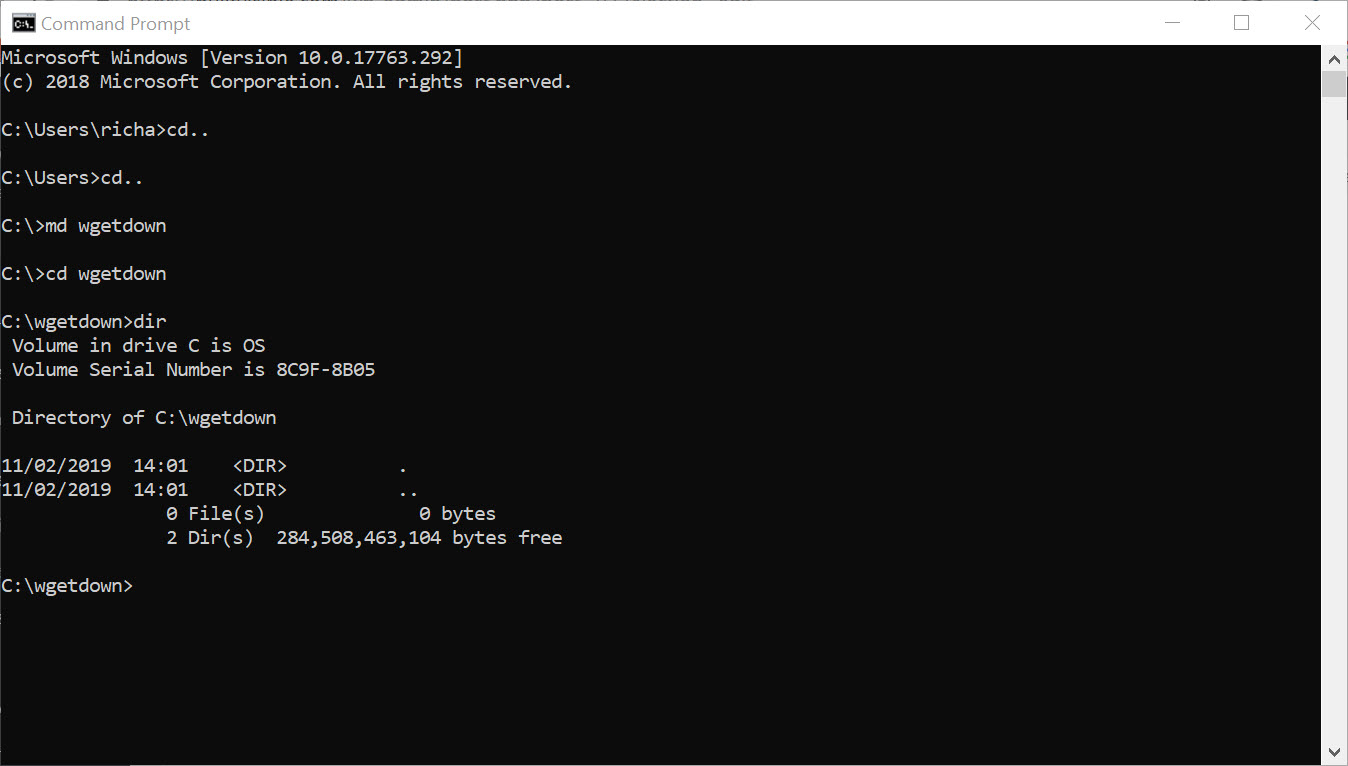
Change to the c:/ prompt and type:
dr. wgetdown
Then, change to your new directory and type "dir" to see the (blank) contents.
At present, y'all're ready to do some downloading.
Example commands
Once you've got WGET installed and you've created a new directory, all you take to practice is learn some of the finer points of WGET arguments to brand sure yous get what you demand.
The Gnu.org WGET manual is a peculiarly useful resource for those inclined to really learn the details.
If yous want some quick commands though, read on. I've listed a ready of instructions to WGET to recursively mirror your site, download all the images, CSS and JavaScript, localise all of the URLs (and so the site works on your local machine), and relieve all the pages as a .html file.
To mirror your site execute this command:
wget -r https://www.yoursite.com
To mirror the site and localise all of the urls:
wget --catechumen-links -r https://world wide web.yoursite.com
To brand a full offline mirror of a site:
wget --mirror --convert-links --adjust-extension --page-requisites --no-parent https://www.yoursite.com
To mirror the site and salvage the files every bit .html:
wget --html-extension -r https://www.yoursite.com
To download all jpg images from a site:
wget -A "*.jpg" -r https://world wide web.yoursite.com
For more filetype-specific operations, check out this useful thread on Stack.
Set a different user agent:
Some web servers are set up to deny WGET's default user agent – for obvious, bandwidth saving reasons. You could attempt changing your user agent to go circular this. For case, past pretending to exist Googlebot:
wget --user-agent="Googlebot/2.1 (+https://www.googlebot.com/bot.html)" -r https://www.yoursite.com
Wget "spider" mode:
Wget can fetch pages without saving them which can be a useful feature in example you're looking for broken links on a website. Call back to enable recursive mode, which allows wget to scan through the document and expect for links to traverse.
wget --spider -r https://www.yoursite.com
You can also relieve this to a log file past adding this option:
wget --spider -r https://www.yoursite.com -o wget.log
Enjoy using this powerful tool, and I hope you've enjoyed my tutorial. Comments welcome!

How To Install Wget On Windows,
Source: https://builtvisible.com/download-your-website-with-wget/
Posted by: rogersburperear.blogspot.com
0 Response to "How To Install Wget On Windows"
Post a Comment